


Trends in the Dental and Orthodontic Fields Using AI
- IOS学術委員

- Aug 18, 2022
- 2 min read
What is AI?・・・
AI (Artificial Intelligence) is a term that refers to a field of computer science that studies "intelligence" using the concept of "computation" and "computer" tools, and AI is currently used in various fields.
The invention of deep learning in 2006, the development of the big data collection environment in 2010, and the improvement of the performance of GPUs, which serve as computational resources, are cited as factors that have led to significant progress in AI-related research.
Around this time, many AI-based studies began to be conducted in the medical field as well.
Application of AI in Dentistry
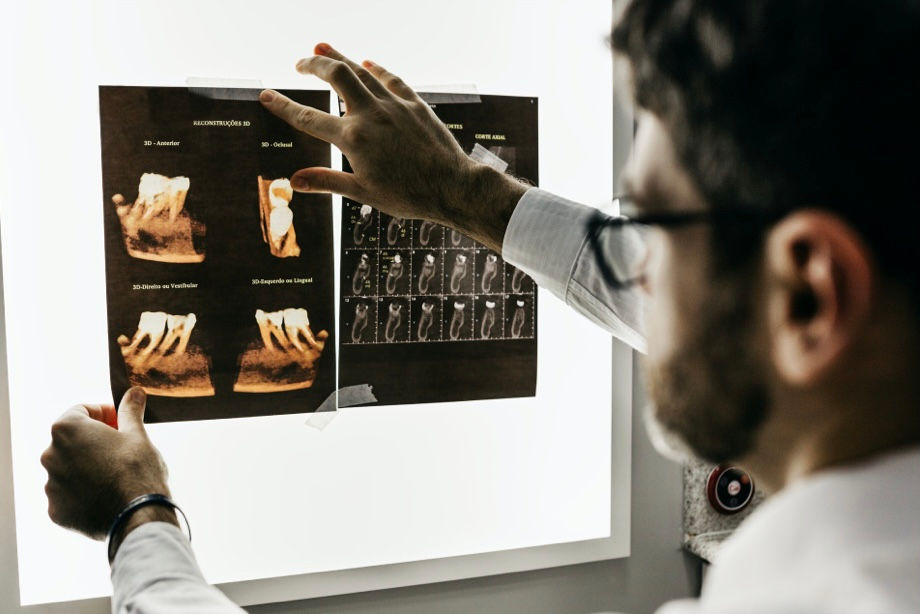
Currently, AI-based research in dentistry is mostly used for diagnosis from x-ray images, such as diagnosis of jawbone lesions, detection of cavities, and diagnosis of root fractures, which may be considered a good match between image diagnosis and AI.
Application of AI in Orthodontics
In the field of orthodontics, diagnostic imaging using cephalometric radiographs has become very important, and research has been conducted since 2008 to automate this cephalometric analysis1). However, due to the problems of left-right overlap and subject magnification in 2D analysis using Cephalo, research on automated 3D analysis using CT is currently underway2)3).
About AI Analysis Software Web Ceph
Currently, there is several lateral head X-ray standard photograph analysis software using AI technology. In this article, we will introduce Web Ceph, a cephalometric application developed in Korea in 2021.

The services of this application include
(1) Patient information management
(2) Automatic cephaloanalysis
(3) Treatment simulation
(4) Medical treatment schedule management
(5) Interactive communication function with patients
(6) Information sharing among doctors, etc.
The accuracy of the Lateral head X-ray standard photograph is beyond expectations, with automatic tracing completed in approximately 1 second and easy fine-tuning of each measurement point, making the system very easy to use. The system is also easy to use for creating and organizing documents, including patient information management, such as pre-and post-treatment overlays.
However, problems include the following
1. Model analysis and frontal cephalometric analysis cannot be performed (frontal function will be added in the future).
2. tooth movement and orthodontic surgery can be simulated, but occlusion cannot be considered
3. it is possible to create a post-treatment facial projection by morphing, but the accuracy is unknown.
To provide an accurate orthodontic diagnosis as future AI analysis software, it is necessary to develop a diagnostic tool that can perform cephalometric analysis, model analysis, evaluation, diagnosis, treatment goals, treatment planning, and treatment simulation all at once by adding functions such as tooth movement simulation when creating aligner-type orthodontic appliances and also utilizing CT data.
______________________________________________________________________________________________________________________________________
References)
1)Angle Orthod. 2008 Jan;78(1):145-51.doi: 10.2319/120506-491.1.
Rosalia Leonardi, Daniela Giordano, Francesco Maiorana, Concetto Spampinato
2)Aust. Dent. J. 2017;62:33–50. Scarfe W.C., Azevedo B., Toghyani S., Farman A.G.
3)Annu Int Conf IEEE Eng Med Biol Soc. 2011;2011:6204-7.
Erkang Cheng, Jinwu Chen, Jie Yang, Huiyang Deng, Yi Wu, Vasileios Megalooikonomou, Bryce Gable, Haibin Ling


Comments